
Zanele Muholi's net worth as of May 2026 is estimated in the range of $1 million to $3 million USD. That range reflects a career built on fine-art photography sales, institutional commissions, grants, publishing, and a steady accumulation of major international prizes, most recently the 2026 Hasselblad Award, which came with a $218,000 USD prize payment. This is not a commercial celebrity figure driven by brand deals or mass-market income. It's the kind of wealth that builds quietly through decades of serious artistic practice, institutional recognition, and international market demand for limited-edition work.
Zanele Muholi Net Worth: Estimated Range and Wealth Drivers

Marcus Holloway
23 May 2026
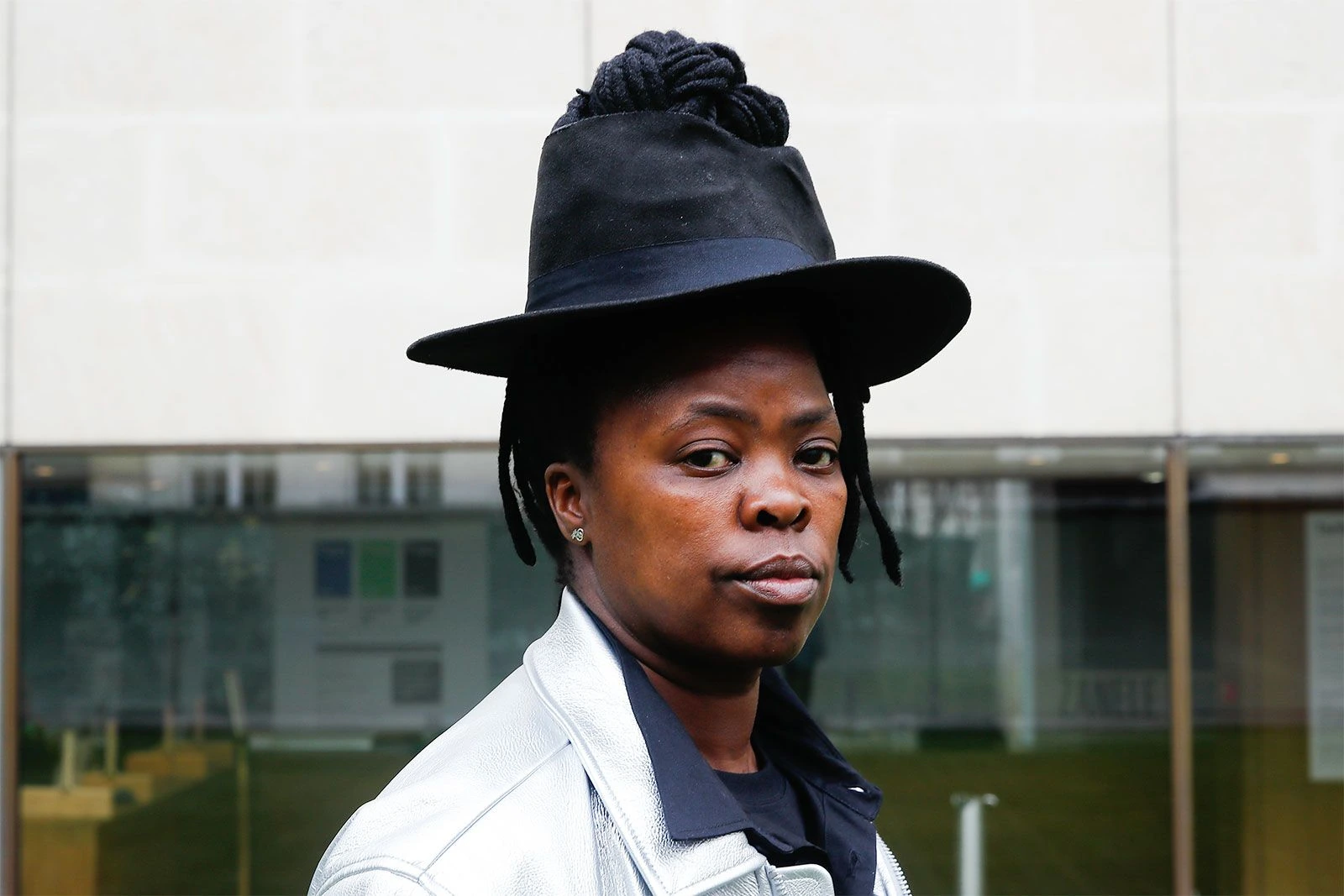
Who Zanele Muholi is (and how to avoid mix-ups)
Zanele Muholi (born 1972, South Africa) is a photographer, visual activist, and multidisciplinary artist whose work spans photography, video, and installation. They use they/them pronouns. Muholi's practice is centered on documenting Black LGBTQIA+ communities in South Africa, most prominently through the long-running series 'Faces and Phases,' which began in 2006. Their early training includes advanced photography at the Market Photo Workshop in Johannesburg (2003) and an MFA in documentary media from Ryerson University (2009).
The name 'Zanele' appears in several other South African public figures, including Zanele Dlamini Mbeki (former First Lady of South Africa) and Zenani Mandela (Nelson Mandela's daughter). None of those individuals are this subject. If you're reading about a South African photographer and visual activist who has shown at SFMOMA, Gropius Bau, and the Isabella Stewart Gardner Museum, and who just won the 2026 Hasselblad Award, you have the right person. Muholi also founded the Muholi Art Institute, which supports photography education in South Africa, providing a further distinctive identifier.
What 'net worth' actually means here
Net worth is total assets minus total liabilities. For a visual artist like Muholi, assets typically include cash and savings, the market value of unsold artwork in their possession, income-generating intellectual property (copyrights, publishing royalties, licensing), any real estate, and the residual value of institutional relationships that generate ongoing income. Liabilities include any debts, operational costs for a studio or art institute, and personal financial obligations.
For fine-art photographers specifically, net worth estimates are harder to pin down than for, say, a musician with known streaming royalties or an actor with disclosed salaries. Art sales happen through galleries and auction houses, often without full public disclosure of the artist's cut. Edition sizes, resale values, and licensing terms are rarely published. So when you see a figure like '$1 million to $3 million,' understand that it's a model built from observable data points, not a number pulled from a financial filing.
The estimated net worth range, and how confident we are
As of May 2026, the credible range for Zanele Muholi's net worth is $1 million to $3 million USD. Confidence level: moderate. The lower bound is supported by documented prize income, verifiable auction results, and the scale of institutional exhibition activity. The upper bound is possible if primary gallery sales and licensing income are factored in at reasonable rates for an artist at this international profile level, but those figures are not publicly disclosed. A single Muholi photograph, 'Bayephi III, Constitution Hill,' sold at Strauss & Co in November 2024 for ZAR 164,150 (roughly $9,000 USD at that exchange rate), exceeding its high estimate. That's one data point, but it's a useful calibration for secondary market pricing. If you are looking specifically for the Zizi Donohoe net worth discussion, this same prize and market-based method is what those estimates typically rely on.
What's included in this estimate: prize winnings (documented), secondary auction market values (documented), reasonable modeling of primary gallery sales and edition income (estimated), and publishing/licensing revenue (estimated). What's not included: any undisclosed real estate holdings, private business stakes, or undocumented philanthropic trusts. Also not included: the institutional value of the Muholi Art Institute itself, which is a separate entity and not a personal income vehicle in the standard sense.
Where the money actually comes from
Art sales: primary gallery and auction markets
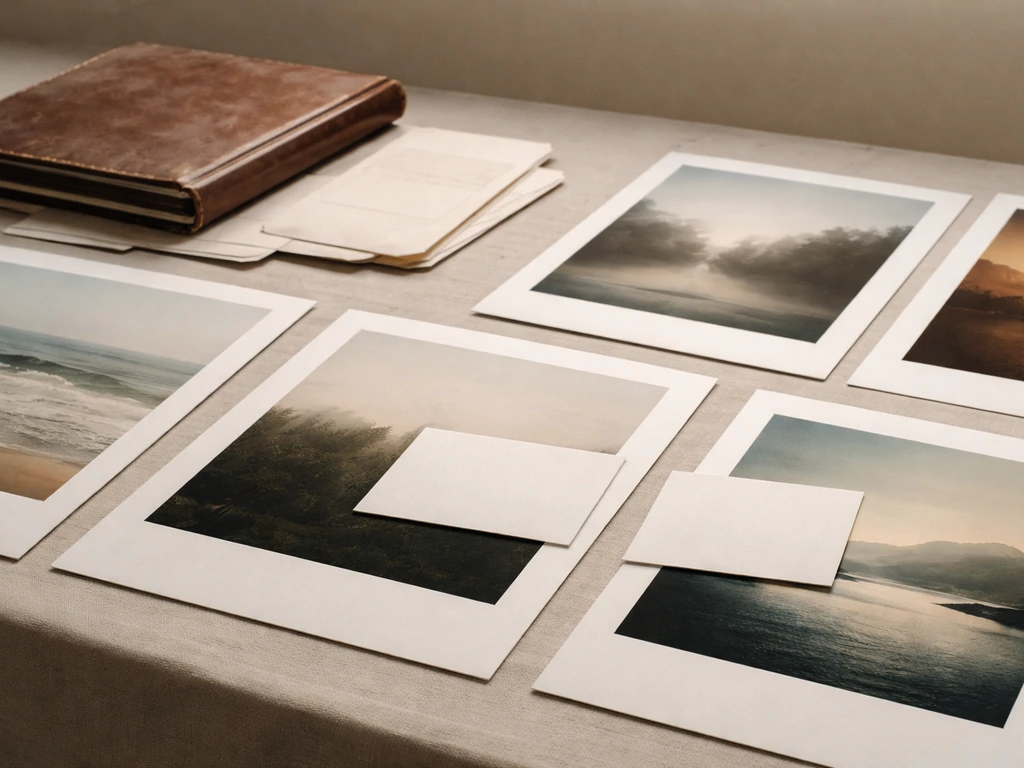
Muholi's prints are editioned, meaning each image is produced in a limited numbered run, typically with 8 prints plus 2 artist's proofs per edition. This is the standard fine-art photography model. Primary sales happen through galleries (Muholi is represented by Yancey Richardson Gallery, among others), where prices for internationally recognized artists at this level routinely reach tens of thousands of dollars per print. Secondary market auction results, like the Strauss & Co sale mentioned above, confirm ongoing collector demand. Magnum Photos also distributes a more accessible 'Square Print' format of Muholi's work at $110 USD, which is a volume-oriented retail channel rather than a primary income driver, but it contributes to profile and brand recognition.
Prizes and awards
This is the most transparently documentable income stream. The 2026 Hasselblad Award, photography's most prestigious international prize, came with $218,000 USD. Prior to that, Muholi received the ICP Infinity Award for Documentary and Photojournalism in 2016 and the Prince Claus Award in 2013. Prize amounts vary, but major international arts awards typically carry between $10,000 and $100,000 in prize money, plus the secondary economic effect of dramatically increasing gallery and institutional demand. Over a career, documented prizes alone likely account for several hundred thousand dollars.
Publishing and licensing

The catalog 'Faces and Phases 2006-2014' is published and sold through gallery and institutional channels. Artist monographs and exhibition catalogs at this level generate modest royalties but meaningful licensing income when images are used in editorial, academic, and institutional contexts. Muholi's work is in the permanent collections of major museums, which typically involves acquisition fees paid to the artist. The ICA Boston, SFMOMA, and multiple other institutions have featured the work, each representing a potential acquisition transaction.
Grants, residencies, and institutional fees
At this career level, artists regularly receive speaking fees, artist residency stipends, and institutional project grants. These are not usually large individually, but they compound over time and support sustained practice without requiring commercial sales. The Muholi Art Institute also generates philanthropic relationships that, while not personal income, reduce operating overhead and extend Muholi's institutional reach.
Career milestones that shaped the financial picture

| Year | Milestone | Financial Impact |
|---|---|---|
| 2003 | Advanced training at Market Photo Workshop, Johannesburg | Foundation for professional practice; low direct income impact |
| 2004 | First solo exhibition at Johannesburg Art Gallery | Establishes market presence; early sales |
| 2006 | Begins 'Faces and Phases' series | Core body of work; ongoing edition sales over 20+ years |
| 2009 | MFA from Ryerson University | Credentialing that opens institutional doors |
| 2013 | Prince Claus Award | Prize income + major visibility spike |
| 2016 | ICP Infinity Award | Prize income + U.S. market profile boost |
| 2021 | Major solo at Gropius Bau, Berlin | Significant institutional validation; drives primary and secondary market demand |
| 2022 | Being Muholi: Portraits as Resistance, Gardner Museum | North American museum profile strengthens collector and institutional demand |
| 2024 | Zanele Muholi: Eye Me, SFMOMA | One of the highest-profile U.S. solo shows; secondary auction prices rise |
| 2026 | 2026 Hasselblad Award ($218,000 USD) | Single largest documented prize payment; global visibility surge |
The trajectory here matters. Each major institutional exhibition correlates with increased auction activity, higher per-print prices, and broader licensing opportunities. The Hasselblad Award in 2026 is a particularly significant inflection point, not just for the prize money but because it positions Muholi in the same company as photography's most historically significant practitioners, which tends to have a durable upward effect on market pricing.
How the estimate might change from here
The Hasselblad Award announcement in April 2026 is almost certainly the biggest single-year event in Muholi's financial history to date. In the months following major international prizes at this level, primary gallery sales typically increase, new institutional commissions are offered, and secondary market auction estimates are revised upward. If a major monograph or traveling exhibition is announced as part of or following the Hasselblad recognition, that would further support the upper end of the $3 million estimate, or push the ceiling higher.
On the other hand, Muholi has publicly funded close to 200 people to study photography at the Market Photo Workshop over roughly 15 years, according to reporting from Wallpaper* in April 2026. That represents meaningful philanthropic expenditure, which reduces net worth in the accounting sense while increasing cultural and institutional capital. Artists who operate this way often have lower personal net worth than their career profile might suggest, because they reinvest earnings into community and practice rather than personal asset accumulation.
Watch for: new major solo exhibition announcements (especially in the U.S., Europe, and Asia), updated auction results through platforms like Strauss & Co and Bonhams, new publication releases or monograph deals, and any reported expansion of the Muholi Art Institute. Each of those signals a potential upward revision to this estimate.
How to verify and track this estimate yourself
Because this is an estimated range, not a certified figure, it's worth knowing how to cross-check and update it. Here's the most practical approach:
- Check auction price results directly: Strauss & Co (primary South African auction house for fine art) and LiveAuctioneers both publish realized prices for Muholi's work. Look at the most recent 12 months of results and compare to estimate ranges.
- Follow the Hasselblad Foundation: The foundation's website documents its laureates and associated exhibitions. A Hasselblad retrospective or catalog is typically part of the award, creating additional publishing income.
- Track gallery representation activity: Yancey Richardson Gallery publishes exhibition histories and press listings. New shows or fairs signal active primary market engagement.
- Monitor major museum exhibition announcements: SFMOMA, Tate, and other flagship institutions occasionally announce traveling versions of shows, which extend revenue periods significantly.
- Search for new award or grant announcements: South African History Online (SAHO), Artsy, and Artforum are reliable places to catch award news before it hits general media.
- Check for new publications: Publisher and gallery catalog pages (like the Yancey Richardson publications page) update when new books are released, which is a proxy for active licensing and royalty income.
- Look at credible biography aggregators: Britannica, NMWA, and Studio Museum in Harlem maintain updated artist bios that reflect major career changes. If something significant has shifted, these pages often reflect it within months.
If you're trying to compare this estimate to other African artists and cultural figures, it's worth noting that net worth figures for artists in this space tend to be lower than comparably prominent musicians, actors, or media personalities, simply because fine-art markets are smaller and less liquid than entertainment markets. If you are specifically looking for Zoleka Mandela net worth figures, check the separate breakdown because different artists’ income sources and disclosure vary widely. For context, other South African and African public figures in similar cultural and artistic roles show a wide range of financial outcomes depending on whether their income is primarily artistic or commercially diversified. Muholi's profile is firmly on the artistic and institutional side of that spectrum. Some readers search for Zandile Msutwana net worth, but this article focuses on Zanele Muholi’s financial picture instead.
FAQ
Why does zanele muholi net worth have a wide $1 million to $3 million range instead of a single number?
The range can shift quickly after major prizes, because they typically trigger higher primary gallery prices and more active secondary-auction bidding within 6 to 18 months. If you want an updated number, the most reliable check is new solo-show announcements plus fresh auction results, then watch whether edition pricing moves upward rather than just whether headlines mention the award.
Could using the wrong name or pronouns cause incorrect information about zanele muholi net worth?
They/them pronouns do not change the net-worth calculation, but they matter for finding the correct public records, press releases, and artist representation listings. When cross-checking income signals, search for “Zanele Muholi” alongside the gallery name(s) and award titles to avoid mixing records with similarly named South African figures.
How much do gallery and auction splits change the accuracy of zanele muholi net worth estimates?
If Muholi sells an edition, the artist’s net depends on the primary gallery split, any licensing carve-outs, and whether additional artists’ proofs are included or excluded. Auction results help for secondary market valuation, but primary-market proceeds are harder to verify without deal terms, which is why the estimate stays probabilistic rather than definitive.
What part of zanele muholi net worth is most likely to come from publishing and licensing, and how is it estimated?
Publishing and licensing can be meaningful even when individual royalty amounts are modest. Royalty income often comes from catalog sales, reprints, museum educational uses, and image licensing for editorial or academic contexts, but the totals are usually not public, so estimates typically model them using industry-standard royalty ranges rather than disclosed statements.
Does funding or involvement with the Muholi Art Institute directly reduce zanele muholi net worth?
Not necessarily. Net worth would be reduced by debts, ongoing studio costs, and major philanthropic or educational spending by the personal side of an artist’s operations. However, if the Muholi Art Institute is legally separate, contributions to it may reduce personal cash flow without showing up as “business assets” owned by Muholi, which makes comparisons to other figures tricky.
If a single photo sold for a high price, how should that affect zanele muholi net worth estimates?
It’s easy to overestimate impact from one sale, because a single high auction hammer price does not guarantee similar sale frequency or consistent per-print net to the artist. A better approach is to track multiple realized auction results over time, and compare them to the typical edition price band implied by gallery offerings.
How do edition size and resale patterns influence zanele muholi net worth over time?
Resale value depends on the collector base for that specific work type and edition run size. If edition sizes are stable but demand grows after major exhibitions, secondary prices can rise. If a particular work is a rarity or has heightened historical context, it can sell above the “usual” calibration, so treat it as a signal, not a new baseline.
Are speaking fees, residencies, and grants worth counting when estimating zanele muholi net worth?
Speaking fees, residencies, and project grants are often relatively smaller than a major international prize, but they can be frequent. A common mistake is ignoring the cumulative effect of many smaller institutional engagements, which can materially support sustained production and reduce the need to rely on frequent artwork sales.
What are common mistakes people make when they look up zanele muholi net worth online?
If you see a “net worth” number that looks too precise, it’s often based on guesswork or an entertainment-style income model that doesn’t fit fine-art markets. For artists, a practical cross-check is to verify prize amounts, confirm realized auction prices (not just estimates), then see whether new exhibitions are consistent with a stepped-up pricing tier.
Under what conditions would zanele muholi net worth reasonably exceed the $3 million estimate?
Yes. The ceiling can move if there is evidence of major primary-market growth, such as repeated high five-figure or low six-figure gallery prices per print, plus new book or monograph deals that expand licensing reach. The upper bound typically assumes licensing and primary sales are stronger than conservative modeling, but those deal terms are rarely public.
How should zanele muholi net worth be compared to net worth figures for musicians or actors?
Compare by market context, not by headline “net worth” style figures. Fine-art photography tends to be less liquid, more edition- and demand-dependent, and less disclosure-friendly than film, music, or brand-driven careers, so the same wealth “method” used for celebrities will usually mislead for artists like Muholi.
Does growth of the Muholi Art Institute mean personal wealth is growing too?
If the Muholi Art Institute expands, that can indicate more institutional connections and future opportunities, but it doesn’t automatically mean Muholi’s personal net worth rises. Expansion might require operating funds and staff, which may be financed via donations or separate entities, so personal wealth impact depends on legal structure and who holds the assets.
Citations
Britannica describes Zanele Muholi as a South African artist and visual activist whose practice includes photography, video, and installation, and it cites major exhibitions such as “Zanele Muholi: Eye Me” (2024) at SFMOMA, “Being Muholi: Portraits as Resistance” (2022) at the Gardner Museum, and “Zanele Muholi” (2021) at Gropius Bau.
https://www.britannica.com/biography/Zanele-Muholi
NMWA identifies Zanele Muholi (they/them) as a South African artist and states they earned advanced photography training at the Market Photo Workshop (Johannesburg) in 2003 and later an MFA in documentary media at Ryerson University in 2009.
https://nmwa.org/art/artists/zanele-muholi/
The Wikipedia profile for Zanele Muholi states she was born in 1972 and frames her as working across photography, video, and installation (i.e., not as another similarly named individual in unrelated fields).
https://en.wikipedia.org/wiki/Zanele_Muholi
A Guardian interview (covering Muholi’s activist-art identity) explicitly uses they/them pronouns and describes “Faces and Phases” as an ongoing central project documenting Black LGBTQIA+ communities in South Africa.
https://www.theguardian.com/artanddesign/2020/nov/02/zanele-muholi-interview-queer-photographer-lgbtq-south-africa-tate
The article lists key career milestones (e.g., early solo exhibition in 2004 at Johannesburg Art Gallery) that are distinctive identifiers when confirming you have the correct Zanele Muholi.
https://en.wikipedia.org/wiki/Zanele_Muholi
The Hasselblad Foundation portfolio page states that Zanele Muholi was named the 2026 Hasselblad Award laureate (a major, time-stamped wealth/income proxy via prize funding and global visibility).
https://www.hasselbladfoundation.org/en/portfolio_page/zanele-muholi-hasselblad-award-2026/
PetaPixel reports that the 2026 Hasselblad Award for Zanele Muholi came with USD 218,000 (a concrete prize-payment figure that can support income/wealth modeling).
https://petapixel.com/2026/03/06/south-african-photographer-zanele-muholi-wins-2026-hasselblad-award-and-218000/
Wallpaper* reports (published April 2026) that Muholi was named the 2026 Hasselblad Award laureate and also discusses how activism/community work and institutional visibility are integral to their practice.
https://www.wallpaper.com/art/photography/zanele-muholi-interview-2026
An identifiable auction sale record for Muholi’s photography: “Bayephi III, Constitution Hill” sold for ZAR 164,150 (lot estimate ZAR 140,000–160,000).
https://www.straussart.co.za/auctions/lot/340-12-nov-2024/351
A retail price signal for an editioned print by Zanele Muholi: the Magnum Square Print is listed at USD $110 (hand-signed/archival label authenticity), providing a proxy for distribution-scale print pricing rather than primary gallery/institution pricing.
https://store.magnumphotos.com/products/magnum-square-print-youth-zanele-muholi
Yancey Richardson’s publications page lists the book/catalog “Faces and Phases 2006-2014 Zanele Muholi,” serving as evidence of publishing-related revenue channels (catalog/licensing/print-run economics) rather than guaranteeing royalty rates.
https://www.yanceyrichardson.com/publications
The SCAD Museum of Art page references editioning details in its exhibition context (e.g., “edition of 8 + 2 artist’s proofs” for a dated work), which is relevant for modeling how editions can translate into sales-based income.
https://www.scadmoa.org/exhibitions/zanele-muholi
Yancey Richardson’s artist page confirms the correct Zanele Muholi as an internationally known South African photographer and activist and ties her to specific exhibitions/press timelines (useful to distinguish from similarly named individuals).
https://www.yanceyrichardson.com/artists/zanele-muholi
The Muholi Art Institute’s website describes the institute’s programs including residencies and educational support; this indicates potential diversification of income/wealth drivers (though it does not disclose Muholi’s personal salary or net assets).
https://www.muholiart.institute/about
Studio Museum in Harlem provides an authoritative institutional artist bio page for Zanele Muholi; such museum bios help confirm identity and career scope when verifying you’re using the correct subject in a net-worth write-up.
https://www.studiomuseum.org/artists/zanele-muholi
ICA Boston’s series page documents Muholi’s “Faces and Phases” as an ongoing series begun in 2006 and frames Muholi as a visual activist; museum pages like this can help align timeline milestones with periods of increased market/income potential (even when they don’t disclose acquisition prices).
https://www.icaboston.org/art/zanele-muholi/series-faces-and-phases/
SFMOMA’s Spring 2024 visitor guide PDF references “Zanele Muholi: Eye Me,” providing a dated, institutional milestone that can be used to correlate with higher earning years (e.g., post-exhibition market demand).
https://sfmoma-media-dev.s3.us-west-1.amazonaws.com/www-media/2024/01/29115724/SFMOMA_VisGuide_Spr24_kh-012524_EN-web.pdf
SAHO provides a South African-context biography and lists multiple awards/prizes (including ICP Infinity Award for Documentary and Photojournalism (2016) and Prince Claus Award (2013)), useful for both identity confirmation and income-impact modeling (prize funding + visibility).
https://sahistory.org.za/people/zanele-muholi
ZAM Magazine’s store listing shows a concrete limited-edition poster/print product (including stated edition quantity and a Euro price), which can be used as a conservative, consumer-market print-sale proxy.
https://www.zammagazine.com/store/296-zanele-muholi
Wallpaper* reports Muholi has funded close to 200 people to study photography at the Market Photo Workshop for about a decade and a half—an indicator of philanthropic spending capacity (but not a disclosed personal net worth).
https://www.wallpaper.com/art/photography/zanele-muholi-interview-2026
LiveAuctioneers hosts a compiled price-results/price-guide page for Zanele Muholi lots, which can be used to estimate market value trends, but the page is secondary and should be cross-checked with primary auction-house lot pages (as in the Strauss & Co example).
https://www.liveauctioneers.com/price-guide/zanele-muholi/25528/
The Magnum product page includes technical/edition authenticity details (hand-signed/archival label; digital C-print specs and edition purchase window), which helps validate that the product is genuinely tied to Muholi rather than an unrelated similarly named artist.
https://store.magnumphotos.com/products/magnum-square-print-youth-zanele-muholi
Next Articles

Zandile Msutwana Net Worth: Estimate, Income Sources, Updates
Zandile Msutwana net worth estimate range, income sources, career milestones, recent updates, and how to verify.
Zenani Mandela Net Worth Estimate: How It’s Calculated
Zenani Mandela net worth estimate with method, income sources, what public data supports, and how to verify updates.

Zanele Dlamini Mbeki Net Worth: Estimated Range and How It’s Built
Estimate range for Zanele Dlamini Mbeki net worth, how figures are built, updated, and verified to avoid scams.