
Zara Realty almost certainly refers to Zara Realty Holding Corp. In a r/AskNYC thread about the worst real estate agent experiences in NYC, a user warns “BEWARE OF blank" rel="noopener noreferrer">ZARA REALTY” and cites 166-07 Hillside Avenue. , a private multifamily landlord headquartered in Jamaica, Queens, NY, with roughly 5,000 rental apartments concentrated in the Queens borough. The company is not a celebrity or public individual, so there is no "personal net worth" to report in the traditional sense. If you meant Zara Lopez specifically, her net worth would be calculated very differently, based on her personal career earnings and assets rather than company equity Zara Lopez net worth. Instead, the relevant figure is an estimated enterprise value or equity value for the privately held real estate operation. Based on publicly available transaction data, a February 2026 refinancing of $225 million across 18 properties is the strongest recent signal, and it points to a total portfolio asset value likely in the range of $700 million to $1 billion, with owner equity estimated somewhere between $300 million and $600 million depending on total debt load. Those are broad ranges for good reason: this is a private company with no public filings, and the number shifts with every deal.
Zara Realty Net Worth Estimate: How to Verify and Calculate

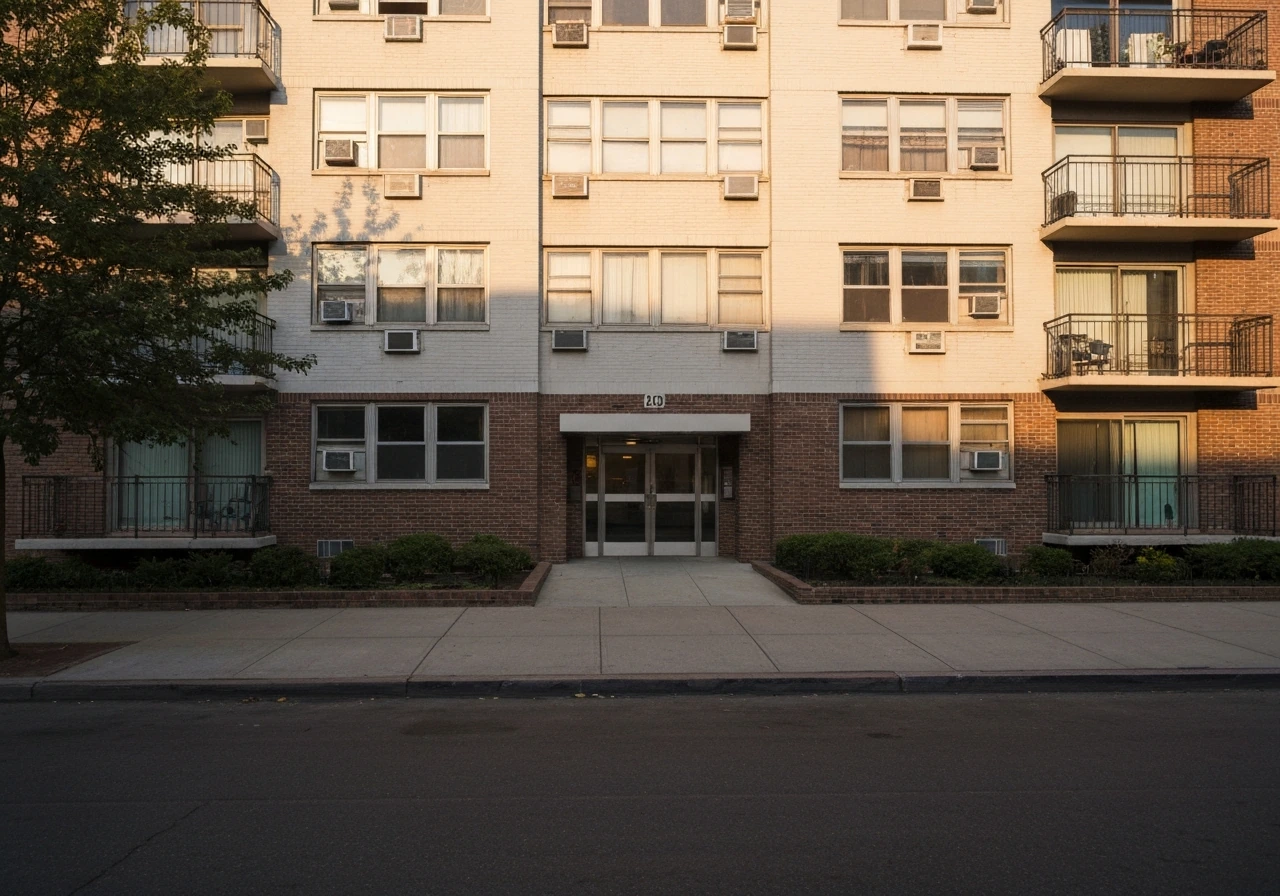
First, confirm which "Zara Realty" you're actually looking for

The name "Zara Realty" is genuinely ambiguous in search results. At least three distinct entities show up when you search it: Zara Realty Holding Corp. (the large Queens multifamily operator at zararealty.com), Zara Realty Group (a smaller, apparently individual-broker-linked brand connected to someone named Luis Zarazua, active on Instagram, Facebook, X, and TikTok via a Linktree hub), and occasional references that conflate the name with individual agents or local boutique agencies. If you searched "Zara Realty net worth" and landed here, there is a very good chance you mean the Queens-based landlord, because that entity has the most documented financial footprint and is the one that appears in property records, OSHA filings, NYC Department of Finance data, and commercial real estate news. But it is worth taking 30 seconds to verify before diving deeper.
To confirm you have the right target, check three things quickly: the official website (zararealty.com), the Instagram handle (@zararealty), and any NYC property records linking to "Zara Realty Holding Corp." at blank" rel="noopener noreferrer">166-07 Hillside Avenue, Jamaica, NY 11432. That address shows up in OSHA establishment records, NYC Department of Finance lookups, and the NY Department of State Division of Corporations filing, where the company appears under document number 955256 with an original filing date of November 7, 1984. If the entity you are researching matches that address and registration, you are looking at the right company. If you are trying to find a smaller local broker or a social-media-branded agent using the Zara name, the financial profile is going to be completely different and far more limited.
What "net worth" actually means here
When people ask about the net worth of a company like Zara Realty Holding Corp., they are usually asking one of two related questions: what is the company worth, or what is the owner worth? Those can produce very different numbers. The company's equity value (what the owners collectively "own" after debt) is the most defensible figure you can estimate from public data. The personal net worth of Ken Subraj, the president of Zara Realty Holdings Corporation, would include his equity stake in the company plus any personal real estate, investments, or other assets, but that level of detail is not publicly available.
For a private real estate holding company, "net worth" in the colloquial sense usually means total asset value minus total liabilities. If the portfolio is worth $900 million and there is $500 million in mortgage debt, the equity is roughly $400 million. That equity belongs to the owners, which in a private, family-operated company like this is typically concentrated among a small group of principals. The Zara Charitable Foundation Inc., a related nonprofit, lists Anthony Subraj as a director, which signals the Subraj family is the ownership group. But the foundation itself is tiny by comparison: its 2025 Form 990-PF filing shows revenue of $235,672 and net assets of just $3,816, making it irrelevant to any valuation of the main operating company.
How net worth estimates are built for private real estate companies

Private real estate companies do not publish earnings or balance sheets, so analysts and researchers work backward from observable signals. The most common methods are income capitalization (estimating net operating income and dividing by a market cap rate), comparable sales (finding what similar multifamily portfolios have sold for per unit), and debt-based inference (using known loan amounts to back into implied asset values, since lenders typically finance 60 to 75 percent of a property's appraised value).
For Zara Realty, the debt-based inference is the most grounded approach right now because of the February 2026 refinancing event. A $225 million refinance covering 18 properties, recorded on March 13, 2026, gives a concrete anchor. If that loan represents roughly 65 percent of the combined appraised value of those 18 properties, the implied value of just those 18 assets is approximately $346 million. Zara Realty's full portfolio is much larger, roughly 5,000 units across what appear to be dozens of buildings based on the 26 unique properties listed in NYC registration data alone. So the $225 million loan covers only a portion of the total portfolio.
The income signals and business footprint that matter
Beyond the refinancing data point, there are several observable signals that help triangulate the company's scale and value.
- Portfolio size: approximately 5,000 rental apartments, primarily in Queens, NYC. Queens multifamily rents have risen sharply since 2020, and average effective rents for stabilized units in Jamaica and surrounding neighborhoods typically run $1,400 to $2,200 per month depending on unit size and rent regulation status.
- Transaction volume: third-party deal-tracking platforms show approximately $157 million in recent transaction volume for the Zara Realty entity, broken down as roughly $20 million in sales and $137 million in financing activity. This is a rough proxy, not a certified figure.
- Historical acquisition pace: in 2012 alone, the company acquired a five-building Queens portfolio for $39 million, adding about 350 units and pushing total holdings to roughly 2,400 units at that time. Portfolio growth from 2,400 to 5,000 units over roughly 13 years shows a steady, deliberate expansion strategy.
- NYC property registration records: RentHistory.org shows "Zara Realty Holding Corp" appearing on 26 registration documents covering 26 unique properties, with specific addresses in Queens including Parsons Boulevard and 193rd Street locations. This is a verifiable floor for the property count.
- PincusCo parcel data: individual BBL (borough-block-lot) entries list Zara Realty Holding as the owner on specific parcels, providing granular confirmation of holdings.
- OSHA and NYC Department of Finance filings: these confirm the company's principal address and operating presence, adding legitimacy to the corporate entity rather than adding valuation data directly.
Taken together, a 5,000-unit Queens portfolio generating even modest average monthly rents of $1,600 per unit would produce gross annual rental income in the range of $96 million. After operating expenses (maintenance, management, taxes, insurance), net operating income might be $40 million to $55 million annually. At a cap rate of 5 to 6 percent, which is reasonable for Queens multifamily in 2026, that implies a total portfolio value of roughly $670 million to $1.1 billion. That range is wide, but it is based on plausible inputs and is consistent with the $225 million refinancing data point.
How to verify this yourself using public records

You do not need to take anyone's word for it. Here are the specific steps to pull primary-source data today.
- Search the NY Department of State Division of Corporations at apps.dos.ny.gov using the entity name "Zara Realty Holding Corp" or document number 955256. This confirms the legal entity, filing date, and registered agent.
- Search the NYC Department of Finance Automated City Register Information System (ACRIS) at a836-acris.nyc.gov for deeds and mortgage documents filed under "Zara Realty Holding." The March 2026 mortgage filing for the $225M refinance should appear here.
- Use the NYC Department of Finance property tax search at nycprop.nyc.gov or the PTSCM tool to look up "C/O Zara Realty Holding Corp" as the mailing address on property tax statements. This surfaces properties the company owns without them being in the direct deed chain.
- Check RentHistory.org by searching "Zara Realty Holding Corp" to see the full registration document list and associated building addresses.
- Use PincusCo (pincusco.com) to search by owner name. The platform aggregates NYC parcel ownership data and will show individual BBL records tied to the Zara Realty entity, including appraised values from city tax assessments.
- Look up recent commercial real estate news on Commercial Observer, The Real Deal, or Bisnow for any reported sale prices or financing events involving Zara Realty. The February 2026 refinancing was reported by PincusCo in March 2026 and is a good baseline.
- Cross-reference OSHA establishment records at osha.gov using the company name to confirm the physical operating address and any inspection history.
One important caution: city tax assessments in NYC are not market value. They are calculated using a fractional assessment system and are typically well below what a property would sell for. Do not use the assessed value as a proxy for actual market value without applying a significant multiplier, and even then treat it as a rough floor rather than a reliable estimate.
Current estimated net worth: the most defensible number
Given all of the above, here is the clearest picture available as of May 2026. Zara Realty Holding Corp. For more context, this article also breaks down how estimates for Zara Realty Holding Corp. relate to what people often call Zara McDonald net worth. is a private multifamily real estate company in Queens with an asset portfolio likely valued in the range of $700 million to $1 billion based on income-based and debt-based valuation methods. If you meant a different person or brand tied to Zara Survivor Australia, check their specific income sources and publicly documented earnings to estimate their net worth separately zara survivor australia net worth. Total debt is unknown with precision, but the February 2026 refinancing alone accounts for $225 million. Assuming a total debt-to-asset ratio of 55 to 65 percent (typical for stabilized multifamily portfolios), owner equity (the real-world equivalent of "net worth" for this company) falls in the range of $280 million to $450 million.
| Metric | Estimated Figure | Confidence Level |
|---|---|---|
| Total portfolio size | ~5,000 units, Queens NYC | High (corroborated by multiple sources) |
| Gross annual rental income (estimated) | $85M – $105M | Moderate (based on market rent proxies) |
| Net operating income (estimated) | $40M – $55M | Moderate (standard expense ratio applied) |
| Total portfolio asset value | $700M – $1B | Moderate (cap rate 5–6%, income-based) |
| Known debt (Feb 2026 refi alone) | $225M | High (public record, 18 properties) |
| Estimated total debt (full portfolio) | $380M – $600M | Low-Moderate (inferred from LTV norms) |
| Estimated owner equity (net worth proxy) | $280M – $450M | Low-Moderate (residual calculation) |
Ken Subraj, as president and apparent principal of the company, would hold most or all of that equity, making his personal net worth likely in a similar range when the business is the primary asset. There are no public signals of large personal real estate holdings or investments outside the Zara Realty umbrella, so this business equity is the dominant wealth driver. The charitable foundation in the Subraj family name has minimal assets, which is typical for philanthropic vehicles that pass donations through rather than accumulate them.
What could move this number, and when to re-check
Real estate company valuations are not static, and for a private company like Zara Realty the estimate can shift materially based on a handful of key events. Interest rate changes are the biggest lever right now: rising rates compress multifamily valuations by pushing cap rates up, while rate cuts do the opposite. Given that the company just completed a major $225 million refinancing in early 2026, the near-term debt structure is probably locked in, but future refinancings will be sensitive to the rate environment.
- Major acquisitions or dispositions: if Zara Realty buys or sells large property clusters, the portfolio value changes directly. The 2012 acquisition added 350 units for $39 million; a similar deal today would be priced much higher given Queens market appreciation.
- Rent regulation changes: a large portion of the portfolio may be subject to New York's rent stabilization laws. Legislative changes to those rules (such as those enacted in 2019 under the Housing Stability and Tenant Protection Act) directly affect revenue potential and therefore asset values.
- Vacancy and operating conditions: a spike in vacancy rates or rising operating costs (insurance, property taxes, maintenance) would compress net operating income and reduce valuations.
- Additional financing events: every time a new mortgage or refinancing is recorded in ACRIS, you get a fresh data point for implied asset values. Check ACRIS periodically for new Zara Realty Holding filings.
- Litigation or regulatory actions: housing court cases, DHCR rent overcharge findings, or HPD violation accumulations can affect both operating income and lender confidence.
- Leadership or ownership changes: any transfer of ownership stakes, estate planning moves, or partnership restructuring would affect the personal wealth picture for Ken Subraj and the Subraj family.
The best time to re-check this estimate is after any reported financing event, property sale, or acquisition involving the Zara Realty name. Commercial real estate data platforms like PincusCo and The Real Deal's deal database are the fastest way to catch those events. A full reassessment would be warranted if the company sells a major portion of its portfolio, completes a significant expansion outside Queens, or if a news event surfaces previously unknown financial details. For a private company of this size, those moments of transparency are rare but genuinely informative when they happen. The February 2026 refinancing was one such moment, and it is the best anchor point available today.
One last note on disambiguation: if after reading this you realize you were actually searching for a different Zara-named figure (such as a public personality or entertainer), the methodology is entirely different. Wealth estimates for individual public figures like reality TV personalities or social media influencers are built from career earnings, brand deals, and personal investments rather than corporate real estate portfolios. Several other "Zara" figures have documented public profiles worth exploring separately if that is your actual target.
FAQ
How can I tell if “Zara Realty” in search results is the same company behind the Queens address and refinancing details?
Use all three identifiers together, website plus the Instagram handle, and confirm the mailing or corporate address in NYC property and business records matches 166-07 Hillside Avenue, Jamaica, NY 11432. If the social accounts or the address do not line up, treat it as a different entity and do not reuse the same net worth assumptions.
Is “net worth” for a private landlord the same thing as “market value” of the properties?
No. For a private real estate company, the practical equivalent of “net worth” is equity, which is implied property value minus total debt. Market value of the portfolio can move quickly with cap rates and interest rates, while equity also depends on the exact loan balances, not just the original mortgage amounts.
What’s the most common mistake people make when estimating Zara Realty’s equity from refinancing data?
Assuming the refinance loan is based on the whole portfolio value. The $225 million event covers a subset of properties, so you need to estimate what fraction of the total portfolio those 18 assets represent, then expand the implied equity estimate accordingly.
Why shouldn’t I rely on NYC tax assessed values to estimate the portfolio’s market value?
NYC assessments are based on a fractional valuation methodology and can materially understate what properties would sell for. If you use assessments anyway, treat them only as a low, imperfect floor, and apply a large uncertainty factor rather than a single multiplier.
When using the debt-to-asset approach (loan-to-value or debt ratio), what range should I use for stabilized Queens multifamily?
A reasonable starting band is roughly 55 to 65 percent debt-to-assets, but re-check it if you see signs of heavy refinance leverage (higher loan amounts per unit) or unusually conservative financing (lower loan amounts). Even a 5 percent change in the debt ratio can shift equity by tens of millions.
How do I estimate NOI without access to Zara Realty financial statements?
Use rent roll proxies from public records where available, then apply expense assumptions typical for multifamily (property taxes, insurance, maintenance, utilities, management, and vacancy). The key is consistency: keep your expense structure aligned with the cap rate and the holding-period assumptions you choose.
Can I use cap rates from sales of similar properties, or should I use a fixed 5 to 6 percent range?
Better to calibrate. If you find comps with clear sale conditions, use their effective cap rates as a guide and adjust for differences in tenant quality, rent growth, building age, and deferred maintenance. A single fixed cap rate may overfit your estimate if the portfolio has unique risk.
What happens to the estimate if interest rates change after the 2026 refinancing?
Equity value can still change even if the debt is temporarily “locked,” because property values reprice when cap rates move. Higher rates generally increase cap rates and reduce implied asset values, shrinking equity, while rate cuts can expand the implied value over time.
How often should I re-check Zara Realty’s estimated net worth?
Re-check after any refinancing, major acquisition, or disposition involving the Zara Realty name, because those events can quickly update the implied leverage and asset base. If you see a new loan amount covering additional buildings, update your “portfolio coverage” assumptions immediately.
If I want the owner’s personal net worth (for example, Ken Subraj), can I just reuse the company equity estimate?
Only as a rough starting point. Personal net worth equals personal ownership share plus any personal assets and minus personal liabilities, and private ownership percentages and outside investments are not always public. If ownership is concentrated, company equity may dominate, but you still need to confirm control and any indirect holdings.
What if the Zara Realty you meant is a different brand or an individual broker connected to the Zara name?
Then you should switch methodologies. Personal brand or agent wealth estimates rely on documented income sources (commission history, brokerage filings if any, business revenues), not portfolio equity inference. Using the company-based valuation method on a small broker can produce meaningless numbers.
Estimated Zara Phillips net worth range, how it’s calculated, income sources, and why results vary over time.

Zara McDermott net worth 2026 estimate with income breakdown, sources, and uncertainty factors for a realistic range.

Zoleka Mandela net worth estimate with sources, income and assets, plus how to judge conflicting, unverifiable claims.